Whangarei Accountants - Elevate CA - Tax, Xero, Business Development, Accounting

Whangarei Accountants serving Northland, Auckland and Whangarei Loving what we do: bringing fresh energy and innovative thinking to your business! Phone 09 430 0910.

  • Home
  • Careers
  • Contact

Property Repairs & Maintenance


If you’re a commercial or residential property investor the stakes are about to get higher in the distinction between repairs and maintenance and capital expenditure.  Repairs and maintenance costs are typically tax deductible.  But from the start of the next tax year, no tax deduction will be possible for depreciating most capital expenditure on most buildings.

The line separating these two types of expenditure can be fine – and the costs of getting it wrong can be high no matter which way you err.  If building repairs and maintenance costs are wrongly treated as capital expenditure, these costs may fall into a black hole with no chance of a tax deduction.  And if during a routine risk assessment the IRD finds capital expenses wrongly claimed as repairs and maintenance, penalties, use of money interest and a full audit may follow.

On one end of the continuum, expenditure that restores the building to the condition when you purchased it is likely to be tax deductible repairs and maintenance.  At the other extreme, work that improves the building is likely to be capital in nature.  And from the next tax year, these capital costs will typically be unable to be depreciated.

Black and white on the face of it, right?

But between these extremes, this can get rather grey.  Property investors often solve maintenance problems during capital expenditure.  Or they may use improved materials for an enhanced result during routine repairs and maintenance.


How do you treat the cost of replacing the somewhat tired original roof on your 1960’s era building that has sprung a serious leak in a storm?


Is fitting a new kitchen capital expenditure or repairs and maintenance?  How about when the old chipboard cabinets have become so soft and musty that the kitchen is generally unhygienic after years of leaking taps and hard use by tenants?


What if you take the opportunity to replace rattling timber joinery with modern aluminium windows after complaints from your tenants about the draughts? 


How do you stand with replacing a stained old toilet bowl and a cistern that no longer flushes reliably with a crisp new water saving unit? 


Or replacing a timber floor that is showing signs of rot around a wet area with a new, waterproof tiled floor?


There is often no black and white answer.  The correct treatment often comes down to the particular facts and circumstances surrounding the expenditure.  Every situation will have its subtle differences that may affect the reasonableness of one position versus the other.

Check with us before assuming your building expenditure will or will not pass scrutiny as tax deductible repairs and maintenance.  A little bit of careful attention will go a long way towards clarifying the situation and maximizing your tax deductions without falling foul of the IRD.

 

How my Business Thrived in the Recession – Whangarei


Although the recession is behind us, many industries are still struggling.

But the Business Owners Forum crew thought we’d end the year on a more positive note than that!  So the final event for the year will feature the topic “How My Business Thrived in the Recession”.

Join us to hear some powerful lessons and stories from a panel who have bucked the trend and thrived during this difficult period.  

Where and When?

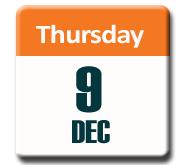
Thursday 9 December – 5:30pm to 7:00pm at the BNZ Partners Centre >>> cnr Rust Ave and Bank Streets, Whangarei.

This event is also being held on the North Shore on 7 December – for full details, click here >>>.


Who’s on the Panel?

Lindsay Faithfull, CEO of McKay Electrical.  Lindsay has succesfully led the growth of McKay Electrical during a time when many in this industry were struggling to survive.  Lindsay has a powerful message for business owners.

Heather Tomason, director of Griffiths & Associates.  Business in construction related industries has been challenging over the past two years – and this company responded quickly and left the recession bigger and stronger for it.  Join us to hear Heather’s story.

Sam Johnson, Managing Partner of BNZ Partners.  Sam has worked closely with many diverse businesses during the recent tough times – and he knows first hand the traits and habits that have separated the successes from the rest.    


As always, Business Owners Forum events are targeted to owners of businesses in the $1 million plus turnover bracket – although all business owners are very welcome.  

These events are free of charge to attend – supported by BNZ Partners, Waterstone Insolvency, The Bottom Line Expense Reduction, – and Elevate CA.  There is never a sell from the supporters – BOFs are just a way to give something back to the business communities that allow us all to thrive. 

If you’d like to join us – or to be included on the invite list for future BOF events, just email Fraser Hurrell by Wednesday 8 December at fraser@elevateCA.co.nz.

How my Business Thrived in the Recession – Albany


Although the recession is behind us, many industries are still struggling.

But the Business Owners Forum crew thought we’d end the year on a more positive note than that!  So the final event for the year will feature the topic “How my Business Thrived in the Recession”.

Join us to hear some powerful lessons and stories from a panel who have bucked the trend and thrived during this difficult period.   


Where and When?

Tuesday 7 December – 5:30pm to 7:00pm at the BNZ Partners Centre >>>  61 Constelletion Drive, North Harbour.

Thursday 9 December in Whangarei – click here >>> for full details of this event.


Who’s on the Panel?

Grant Hewson, General Manager of Accomplish Global.  Grant has succesfully led the growth of the Accomplish brand internationally during a time when business to business growth has been tough to say the least.

Judy McGrath, owner of Flying Flowers.  Business in the retail space has been challenging over the past two years – and there is not a lot of light at the end of the tunnel.  Join us to hear Judy’s story.

Ngaio Merrick, Business Development Manager of Auckland Tourism, Events and Economic Development – or better known pre-super-city as Enterprise North Shore.  Ngaio has worked with businesses of all ilks during the tough times – and she knows first hand what has separated the successes from the rest.    


As always, Business Owners Forum events are targeted to owners of businesses in the $1 million plus turnover bracket – although all business owners are very welcome.  

These events are free of charge to attend – supported by BNZ Partners, Waterstone Insolvency, The Bottom Line Expense Reduction, Auckland Tourism, Events and Economic Development – and Elevate CA.  There is never a sell from the supporters – BOFs are just a way to give something back to the business communities that allow us all to thrive. 

If you’d like to join us – or to be included on the invite list for future BOF events, just email Fraser Hurrell by Monday at fraser@elevateCA.co.nz.


The “Look Through Company” (LTC)


We now know that LAQCs will no longer be able to attribute their losses to shareholders from 1 April 2011. 

Now that the draft legislation has been released, we have a much clearer view of how the new rules announced in the budget will look.  On the face of it, this seems a rather radical departure from the changes proposed in the budget, which included no such axing of the ability of shareholders to access an LAQC’s losses.

However the draft legislation also introduces the “Look Through Company” (LTC), which will allow allocation of the company’s losses to shareholders in proportion to their shareholding.

The new LTC seems likely to be the new preferred option for people who currently hold loss making businesses or investments in LAQCs.  Shareholders will be able to elect for their existing LAQC or newly incorporated company to become an LTC from 1 April 2011.

So what makes an LTC different to existing LAQCs?  There are many subtleties, but the top three changes that will affect most existing LAQCs are these:


Unlike existing LAQCs rules, shareholders of LTCs will be personally taxed on the company’s profit at their own marginal tax rate. This seems reasonable as it aligns the treatment of the company’s profits with the treatment of its losses.

Unlike existing LAQCs, any transfer of shares in an LTC will be treated as a sale of the underlying assets. This may trigger significant depreciation recovery issues creating a tax bill without the funds to pay the tax from an actual sale of the asset. Careful management will be needed here.

Shareholders will only be able to access LTC tax losses to the extent the losses reflect their own economic loss from the company’s activities. “Economic loss” will include share capital, shareholder loans and company debt guaranteed by the shareholder, so this is not as narrow a test as many people feared following the budget.


All those currently operating LAQCs will need to consider their options with their tax advisors. Options will include:

The default option which is unlikely to be the best option will be to continue as a QC without the ability to attribute losses to shareholders.

Revoking LAQC status and being taxed as an ordinary company.

Electing to become an LTC as detailed above.

Becoming a partnership or a sole trader. Special rules will allow this transition without a tax cost – although if property is involved there will be significant conveyancing, legal and bank costs.


If you hold property investments in an LAQC, I suggest you review this with your tax advisor.

Some of the issues that will need to be considered are:  How long do you intend to own the property?  Do you intend to introduce other shareholders in the future – or to transfer shares into your trust at any point?  Does the property generate losses?  How long might these losses continue given the changes to depreciation rules?  What is your actual economic investment in the LAQC and how might this change in the future?

Although the introduction of the LTC is a complicating factor since the original budget announcements back in May, the new LTC structure does broadly reflect the changes announced in the budget.


Thriving in the New Normal


The phrase “new normal” has been circulating for a while now to describe the current state of affairs featuring a tougher banking environment and retrenchment of debt laden businesses and households.  The new normal envisages a future where the economy is powered by exports and business investment rather than by consumption, easy credit and rising asset prices.

Consumers are adapting to the new normal en masse by delaying gratification and repaying debt.  We are collectively holding off on buying big ticket items – and we are adopting the collective attitude that if something isn’t on sale and seriously discounted, then we won’t buy it until the vendor is willing to just about give it away.  We want to see some blood on the floor before we commit.

Tough for business owners who are hanging on in anticipation of a return to the “old normal”!

So how does your business thrive in the new normal environment?   Here are our top seven tips:


Continue to be lean.  Assume that boom times are not around the corner, so lock in those bootstrapping attitudes that have served you well through the past couple of years. Don’t relax vigilance with keeping overheads under strict control. 

Monitor your margins closely – for the full range of your goods and services.  There is still potential for costs to increase – and your ability to pass these on may be limited.  The new normal is not an environment where you can thrive on the average of profitable and unprofitable activities.

Use cash surpluses to pay down debts.  The new normal is no time for excessive leverage.

Take good care of your customers – and focus on adding value for them.  Those businesses that are able to provide significant value with superior service will be the ones that gain market share and thrive in the new normal.

Look for growth opportunity – and if you do expand, continue to bootstrap and try to keep your use of debt to a minimum.

More than ever – remember, cash is king. Focus on your debtors and cash management every day – and try to keep enough cash on hand – or enough headroom on your banking facility – to cover at least 30 days of expenses.  Preferably more.  

Deal with employee issues with an approach that is seen to make sense.  Despite relatively high unemployment, there is still a skills shortage – and you’re probably operating with a pared down team.  Make sure your crew appreciates and buys into the direction your business must take to thrive in the new normal – and make sure that in return you are adding value for your team on the way through.


The old normal is unlikely to return any time soon – if at all.  Those businesses that have survived the ressession in reasonable shape – and who focus on the seven points above will likely stay ahead of their industry averages, gain market share and thrive in the new normal environment.


  • « Previous Page
  • 1
  • …
  • 24
  • 25
  • 26
  • 27
  • 28
  • …
  • 43
  • Next Page »

Copyright © 2026 · Elevate CA Limited. Chartered Accountants and Business Specialists · Login